Palestine was inhabited: the record of dispossession
Zionism's founding slogan was “Palestine is a country without a people; the Jews are a people without a country” (Israel Zangwill, 1901). Palestine was never empty. What follows is how they have tried to make the slogan true: Britain's 1917 promise, the Nakba, the 1967 occupation, and what the UN Commission of Inquiry has found to be extermination and genocide in Gaza.
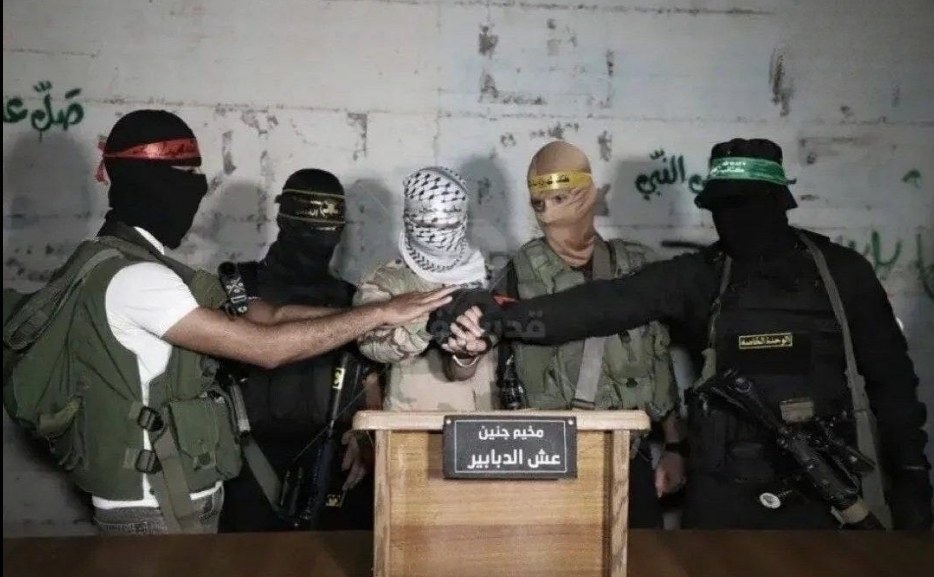
The armed groups that crossed on October 7
According to ECFR, more than 1,000 Qassam Brigades fighters crossed first, under rocket and mortar cover. Five other armed groups followed them. Three of those five come from the secular, PLO or Fatah family of factions, not the Islamist camp.
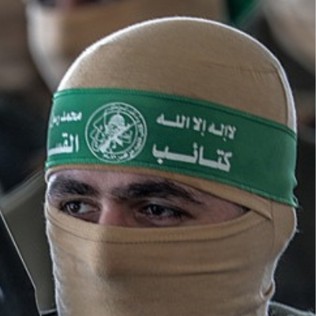
Izz al-Din al-Qassam Brigades
The largest armed group in Gaza. Led the assault on bases, towns and the Nova festival. Its commander Mohammed Deif and deputy Marwan Issa were both killed by Israel during the war.
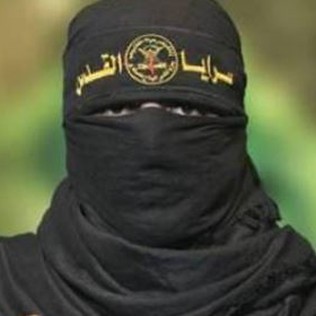
Al-Quds Brigades
The second-largest armed group in Gaza, and also active in Jenin and Nablus under the "Jenin Battalion" umbrella.
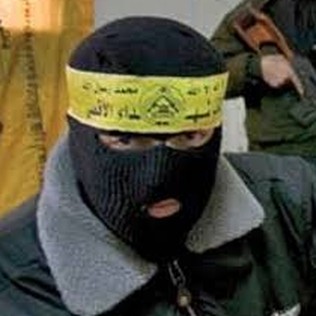
Al-Aqsa Martyrs Brigades
A network linked to Fatah, the party that runs the PA, though Fatah has never formally owned it. Its splinter groups operate in Gaza.
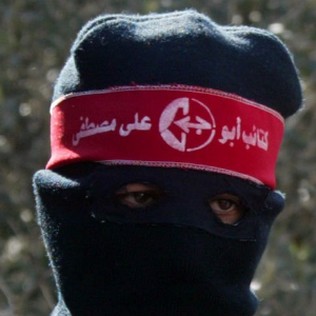
Abu Ali Mustafa Brigades
The armed wing of the Marxist PFLP, the second-largest faction in the PLO. It is named after the PFLP leader Israel killed in 2001.
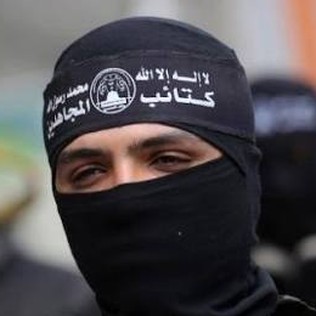
Mujahideen Brigades
Founded by Fatah members and PA security officers who rejected Oslo. ECFR says it took Thai and Israeli Captives, including the Bibas family. Israel has named different groups at different times as the Bibas family's captors (see the Bibas records).
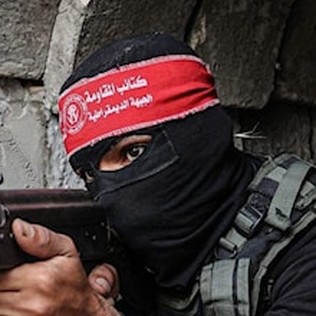
National Resistance Brigades
The armed wing of the DFLP, which was the first PLO faction to back a two-state solution.
Full profiles: leadership, history, structure and sources. Also: Al-Nasser Salah al-Deen Brigades (PRC) · Lion’s Den
Before the IDF: Haganah, Irgun and Lehi
Before Israel had an army it had underground militias: the Haganah, the Irgun and Lehi, the "Stern Gang". Britain hunted them as terrorists, Lehi called its own methods terror, and two of their commanders, Menachem Begin and Yitzhak Shamir, became prime ministers. After 1948 their fighters were folded into the army and amnestied. The extremist strand never went away.
Haganah and the Palmach
The Jewish Agency's underground army, and the force that became the IDF
The Jewish Agency's underground army and its strike force. Officially the defensive force, it fought alongside the Irgun and Lehi in 1945-46 and bombed the Patria and the Semiramis Hotel.
Irgun Zvai Leumi
Begin's underground: the King David Hotel, Acre Prison and Deir Yassin
Broke away from the Haganah. Commanded from 1943 by Menachem Begin, prime minister 1977-1983. King David Hotel, Acre Prison, Deir Yassin.
Lehi
The "Stern Gang": Lord Moyne, the letter bombs and Count Bernadotte
Broke away from the Irgun under Avraham Stern. After his death in 1942 it was run by three men, Yitzhak Shamir among them, prime minister 1983-84 and 1986-92. Lord Moyne, the letter bombs, Count Bernadotte.
Terrorism, in their own words
Neither Jewish ethics nor Jewish tradition can disqualify terrorism as a means of combat.Lehi, "Terror", in its journal He Khazit, 1943. Unsigned; commonly attributed to Yitzhak Shamir. MERIP ↗
From the moral point of view, there is no difference between personal terror and collective terror.Yitzhak Shamir, as prime minister, on Lehi's 51st anniversary, September 1991. The US State Department replied: "No matter what the justification or objective, we condemn terrorism." JTA ↗
Personal terrorism is a way of fighting that is acceptable under certain conditions and by certain movements.Yitzhak Shamir, as prime minister, in the same army radio interview. Palestinians, he said, are "fighting for land that is not theirs." Associated Press in the San Francisco Chronicle, 6 September 1991, headlined "Shamir Says Terrorism Was 'Acceptable' For Jews, Not Arabs". See the clipping ↗
Hand in glove with Irgun Zvai Leumi, the outlawed terrorist army.British Pathé on the Haganah, "Palestine Defies Peacemakers", 1948. Watch ↗
Terrorist women are a new provocation to British troops.British Pathé on Lehi's captured fighters, "Palestine Beware", 1946. Watch ↗
Governing through proxies: clans, guns and Israeli backing
Israel has used Palestinian intermediaries to govern Palestinians for nearly 50 years. Each attempt used the same tool: clans and local strongmen.
The Gaza militias Israel armed
Photo: ABC News (Australia)What's wrong with that?Benjamin Netanyahu, Israel's prime minister, after it emerged that Israel had armed and trained Yasser Abu Shabab's violent militia in Gaza. A gang with ISIS extremists in its ranks.Haaretz · Melman, June 2025 · SRC-00001757 ↗
Since the 2023 war began, Israel has courted Gaza's big families and clans to run "Hamas-free zones", hand out aid and police the population for it. ECFR tracks five armed groups that came out of this. Most are small; the largest is a Rafah gang with ISIS veterans in its leadership.
Popular Forces
Founded by Yasser Abu Shabab (born 1990), jailed by Hamas for drug smuggling until he broke out early in the war. An armed group and criminal gang widely accused of looting UN aid convoys, protected and armed by Israel. An internal UN memo seen by the Washington Post called him the main force behind "systematic and massive looting", with the gangs enjoying "passive if not active" protection from the Israeli army. In November 2024 a Hamas ambush killed his brother Fathi and 21 of his men. In June 2025 Israeli defense sources confirmed handing the gang Kalashnikovs, some seized from Hamas, on Netanyahu's say-so without the security cabinet; Netanyahu's defence was that "it saves lives of IDF soldiers." His own Tarabin tribe publicly disowned him in November 2024. Israeli media also report it draws salaries from the Palestinian Authority through a Fatah intelligence officer, which the PA denies. Abu Shabab died on 4 December 2025 in east Rafah, inside the Israeli-held zone. The group said he was shot trying to settle a clan dispute. Israel's own security establishment told Kan he was beaten to death by his own men and bodyguards in a fight over honour, money and roles, stressed Hamas had nothing to do with it, and a security source said Israel would keep working with the militias because the model "saved soldiers' lives" and "has proven itself."
Ghassan al-Dahini and Issam Nabahin
Al-Dahini, also Tarabin, took over after Abu Shabab's death and is alleged to be a former Jaysh al-Islam member. His fellow deputy Nabahin (born c. 1992, Nuseirat) was in Jaysh al-Islam, reportedly fought for ISIS in Sinai against the Egyptian army, fired rockets at Israel, and killed a Gaza policeman in 2023. Hamas sentenced him to death; he escaped prison after October 7.
Shadi al-Sufi and Saddam Abu Zakkar
Al-Sufi, like Abu Shabab and al-Dahini a Tarabin, is a convicted murderer and drug trafficker who was under a death sentence and reportedly escaped prison during the war. Aid workers name him as one of the main figures looting aid under Israeli army protection, and he is reported to have killed PFLP commander Jabr al-Qiq in 2020. Local authorities, cited by The New Arab, say Saddam Abu Zakkar helped al-Dahini recruit for the gang.
Strike Force Against Terror
Led by Hussam al-Astal, a former PA Preventive Security officer who says, and footage shows, that Israel supplies the group with aid and weapons. Hamas had convicted him over the 2018 killing of Palestinian scientist Fadi al-Batsh in Malaysia, carried out with Israel; he escaped a Hamas prison during the invasion.
Popular Army Northern Forces
Run by Ashraf al-Mansi.
Popular Army
Led by Shawqi Abu Nasira, "the crocodile", a retired PA police officer and Fatah member from Rafah who spent 16 years in Israeli prison after an arrest in the 1980s.
Popular Defence Forces
Led by Rami Hilles (born 1979), reportedly ex-PA Presidential Guard and a Fatah member from the Hilles clan, which has long ties to Fatah. He says he works in coordination with the PA.
Palestine on film: the Mandate and 1948
British Pathé newsreels from the last years of the Mandate and the 1948 war. These were made for British cinema audiences, and the commentary carries the colonial framing of its time.
British Pathé on YouTube ↗
British Pathé on YouTube ↗
British Pathé on YouTube ↗
British Pathé on YouTube ↗
British Pathé on YouTube ↗
British Pathé on YouTube ↗
British Pathé on YouTube ↗
British Pathé on YouTube ↗
British Pathé on YouTube ↗
Follow the record further
Archives and references worth your time. Each is logged as a source in the archive.
Documents and sources for this history
European Council on Foreign Relations, Mapping Palestinian Politics. Checked October 15, 2026. ECFR updates these pages regularly, so each link shows the current version.
Header figures. Displaced in 1948, ~750,000: the figure UNRWA and most historians use; estimates run from about 700,000 to 750,000, and UN News uses the lower end (Maha Nassar, The Conversation, May 2023, SRC-00003596). Area B, 21%: the Palestinian Authority runs civil affairs, Israel keeps security control and raids at will (Al Jazeera, SRC-00002686). 925 obstacles: OCHA's count at December 2025: 89 checkpoints staffed around the clock, 218 partly staffed, 232 road gates, and 386 earth mounds, roadblocks and linear closures; 43% above the 20-year average (OCHA, April 2026, SRC-00002687). 175,000+ killed since 1917: our estimate, adding three published counts. About 5,000 Arabs killed in the 1936-39 revolt (Origins, Ohio State, SRC-00002688); more than 154,000 Palestinian and Arab dead from 1948 to May 2025, a count that includes Arabs killed alongside them (Palestinian Central Bureau of Statistics, SRC-00002689); and about 19,800 more killed in Gaza between early May 2025 (about 52,800) and the end of April 2026 (72,601), per the Gaza Health Ministry (IMEMC via Israel-Palestine News, SRC-00002690). It leaves out the 1920s riots and deaths since May 2026, so it is a floor.
Zangwill's 1901 wording (“The Return to Palestine”, New Liberal Review, December 1901, p. 615) as cited in Diana Muir, “A Land without a People for a People without a Land”, Middle East Quarterly, Spring 2008 (SRC-00002683).
United Nations, Historical Timeline: Question of Palestine (UNISPAL, last updated Sep 30, 2024). Entries marked "UN".
• UN documents on the Question of Palestine: resolutions, reports and meeting records from the UN's own archive (UNISPAL).
• British Pathé newsreels on Palestine: original film from the Mandate years, 1948 and after.